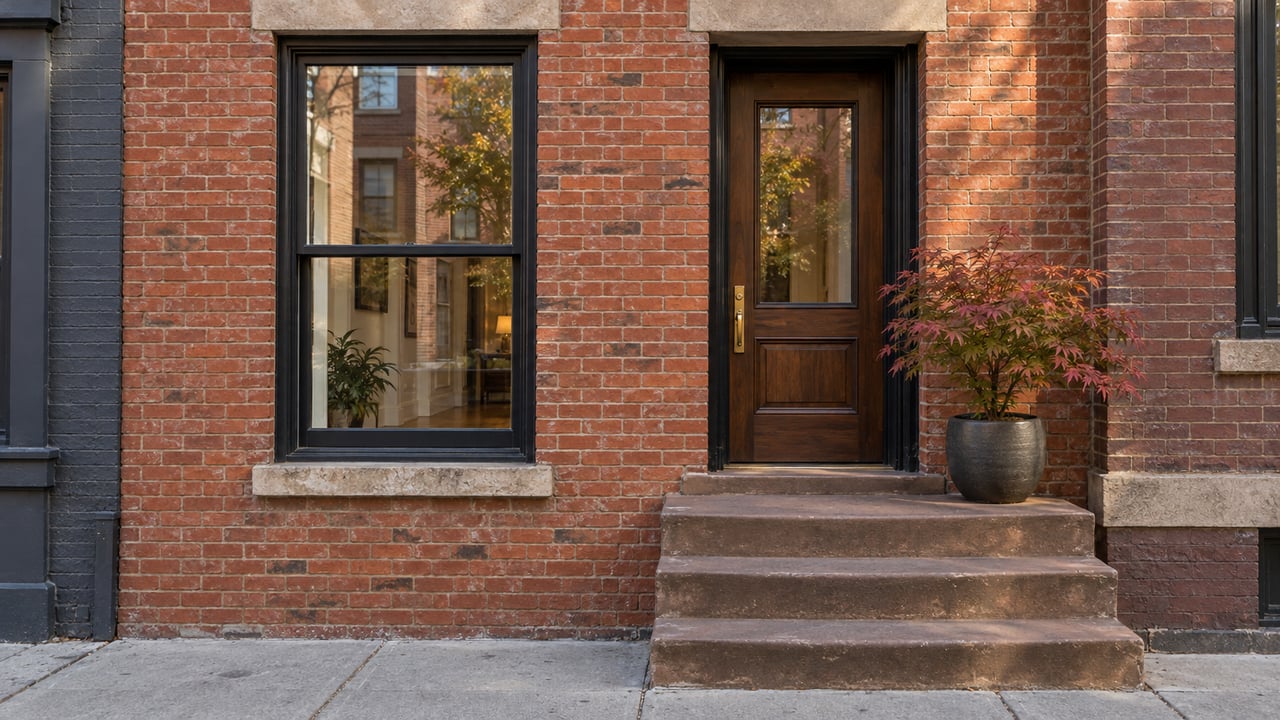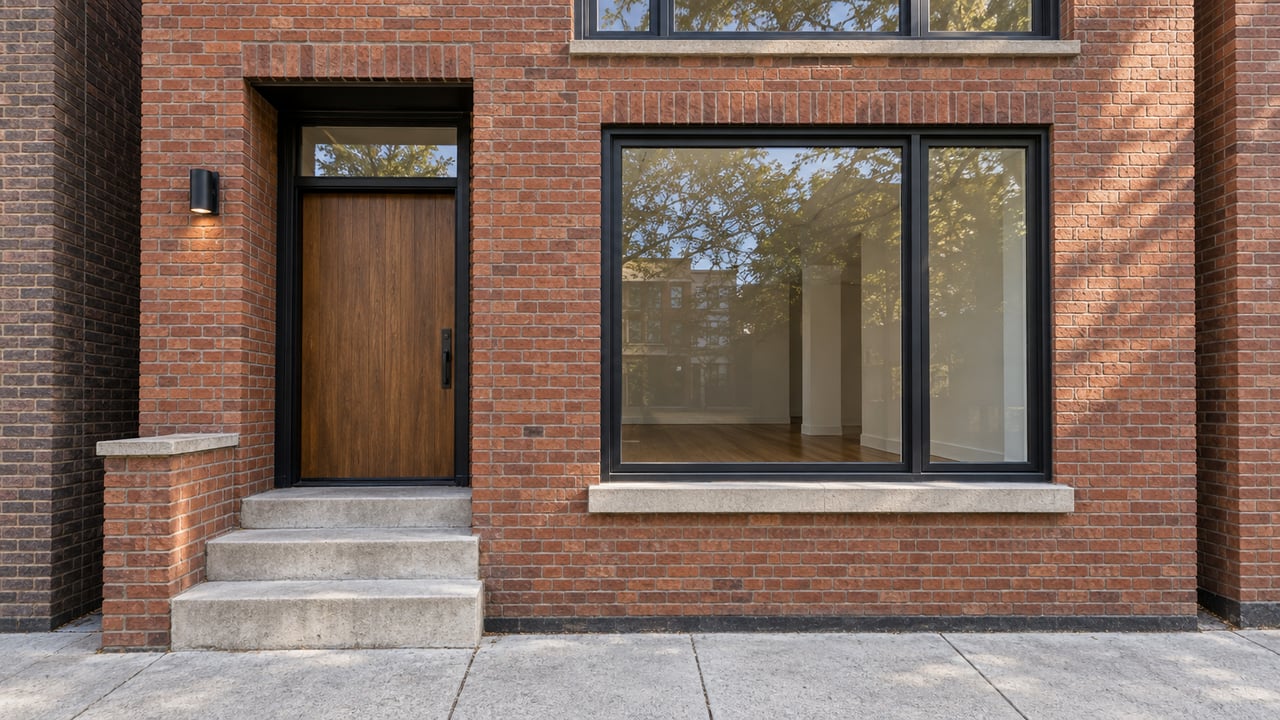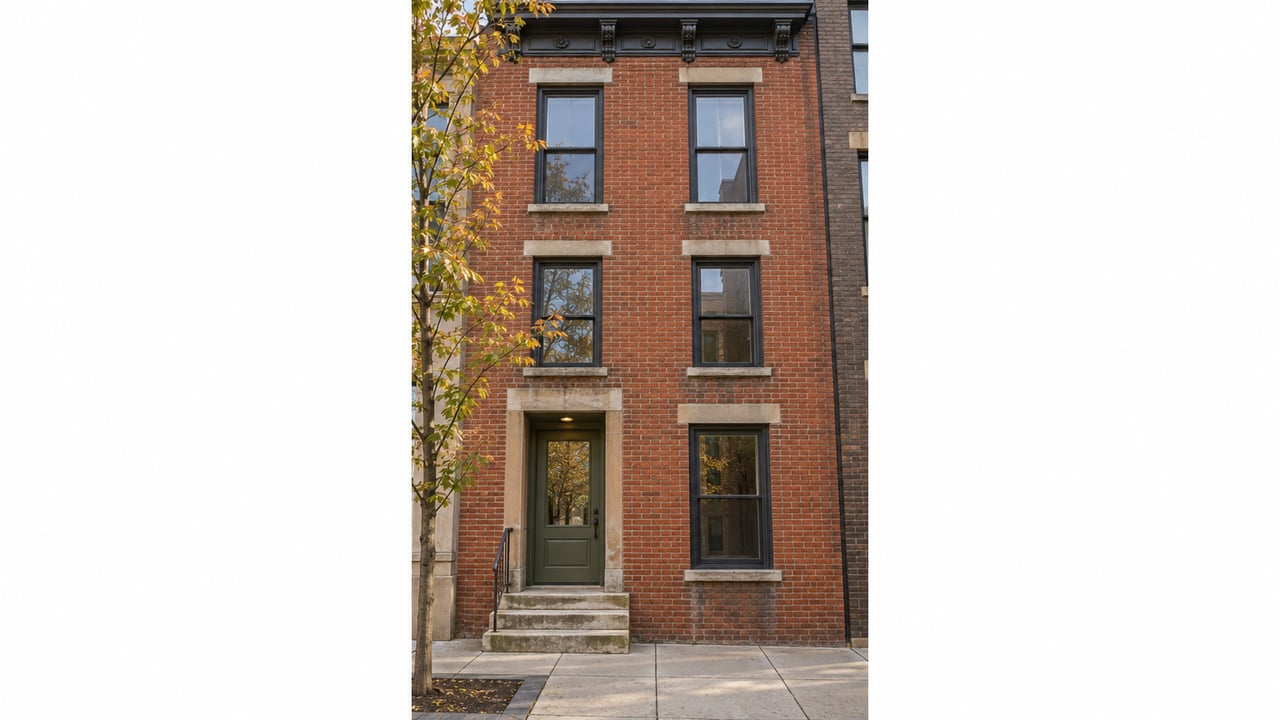
Walk east on Wallace Street toward Broad and the sidewalk stops matching the compass. The block tilts, then straightens, then tilts again, following an angle that has nothing to do with the rest of Philadelphia's grid. That's not a design accident. Francisville was laid out before the city's north-south street plan reached this far north, so its earliest lanes ran parallel to old Ridge Avenue instead, the route that once carried travelers from Center City up toward East Falls. The result is a neighborhood bounded by Fairmount Avenue to the south, Girard Avenue to the north, Broad Street to the east, and Corinthian Avenue to the west, with a street grid that still remembers a road that predates the grid itself.
That shape matters more than it sounds like it should. Francisville is small, residential, and dense with rowhomes, and it has never had a commercial spine running through its middle the way Frankford Avenue does through Fishtown or East Passyunk Avenue does through lower South Philly. What it has instead is a set of four borders, and each one has quietly taken on a different job. If you live here, your calendar isn't organized by a Main Street. It's organized by which edge of Francisville you're heading toward on a given night.
The East Edge Runs on Broad Street
The Met Presented by Highmark sits at 858 N. Broad Street, which puts it almost exactly on Francisville's eastern boundary. The building opened in 1908 as the Philadelphia Metropolitan Opera House, went through stretches as a movie palace, a boxing venue, and a working church, and sat mostly dormant for decades before a $56 million restoration led by Live Nation and developer Eric Blumenfeld brought it back as a concert hall. It reopened in December 2018 with a Bob Dylan show, and it now holds close to 3,500 people under restored 1908 plasterwork and a soaring proscenium arch.
What makes The Met a genuine Francisville fixture rather than just a nearby landmark is its position relative to transit. The venue sits roughly midway between SEPTA's Girard and Fairmount stations on the Broad Street Line, the same two subway stops that mark the neighborhood's north and south edges. A show at The Met means a walk down the exact street that forms Francisville's border, past the same corner every time, regardless of whether the marquee that week says comedy, arena pop, or metal. The building's bookings have stretched from Sabaton to Chelsea Handler, a range that gives the room something for nearly every taste, and that room sits on the one street every Francisville resident already crosses to get anywhere else.
The South Edge Runs on Fairmount Avenue
Cross to the opposite border and the job changes from music to food. Bar Hygge, at 1720 Fairmount Avenue, sits so close to the boundary line that different directories can't agree which side of it the bar is actually on. Yelp tags the address Francisville and Fairmount both. Time Out lists it under Francisville. The bar's own website places it in Spring Garden. Nobody is wrong, exactly. The building sits close enough to three neighborhood lines that it belongs to whichever one is doing the describing, which is its own small proof of how much of Francisville's identity happens at its edges rather than its center.
Inside, Bar Hygge runs its own house brewery, Brewery Techne, alongside a full bar and a menu built around shareable plates in a room full of mismatched, cozy seating. A few doors further down Fairmount Avenue, just over the line into the Fairmount neighborhood proper, Eastern State Penitentiary has spent this year running a yearlong program called "A Time for Liberty," timed to the country's 250th anniversary. Residents near this border don't need to leave the block to get dinner, a drink, and a piece of the city's semiquincentennial programming. They just need to be standing on the border that does that work.
The West Edge Is Still Being Built
Corinthian Avenue, one of the neighborhood's borders, doesn't have an anchor yet. It has a promise. The Rail Park, the elevated greenway built on a former Reading Railroad viaduct, opened its first quarter-mile section back in 2018 between Broad and Noble streets and Callowhill, and it has spent the years since welcoming visitors up onto that stretch of restored steel and plantings. The project's next phase, known as The Cut, would take a below-grade section of the old rail corridor and turn it into public space that physically links Fairmount, Francisville, and Spring Garden for the first time.
As of this year, that phase is still in the design and community-engagement stage. The Center City District has brought on Urban Engineers and Studio Bryan Hanes to lead the technical work, and Friends of the Rail Park has been running community sessions, including a "Rail Time Park Capsule" project meant to gather what residents in the surrounding neighborhoods, Francisville included, actually want the space to become. Nobody living on Corinthian Avenue can walk into a finished park yet. But the plan on the table is explicit about connecting this exact block, which makes the west edge the one border of the neighborhood that's still being negotiated in real time rather than already open for business.
The One Anchor That Isn't a Border
Francisville has almost no civic space that isn't one of its four edges. Because the neighborhood is small and mostly residential, it has historically leaned on surrounding areas for the kind of institutions, libraries, larger recreation centers, that a bigger neighborhood would house internally. There's one clear exception. Francisville Playground, at 1737-39 Francis Street, sits well inside the neighborhood, not on any of its borders. The playground has a full baseball field, a dedicated play area for younger kids, two basketball courts, and a large community swimming pool, which makes it the rare piece of Francisville that doesn't require crossing onto Broad, Fairmount, Girard, or Corinthian to reach.
That's worth noticing precisely because it's the exception. Everything else that defines a week here, the concert at The Met, the drink at Bar Hygge, the eventual walk through The Cut, happens at a border the neighborhood shares with somewhere else. The playground on Francis Street is the one place in Francisville that belongs only to Francisville.
Living in a neighborhood like this changes what "neighborhood life" even means. There isn't a single stretch of storefronts to describe when someone asks what it's like to live here. There are four working borders and one interior anchor that hasn't been claimed by a neighboring area yet.
If you're curious how a neighborhood with this kind of shape actually holds together street by street, or what it might mean for how a specific block lives day to day, that's the kind of question Conchetta Park spends her time answering for people who already call Philadelphia home.