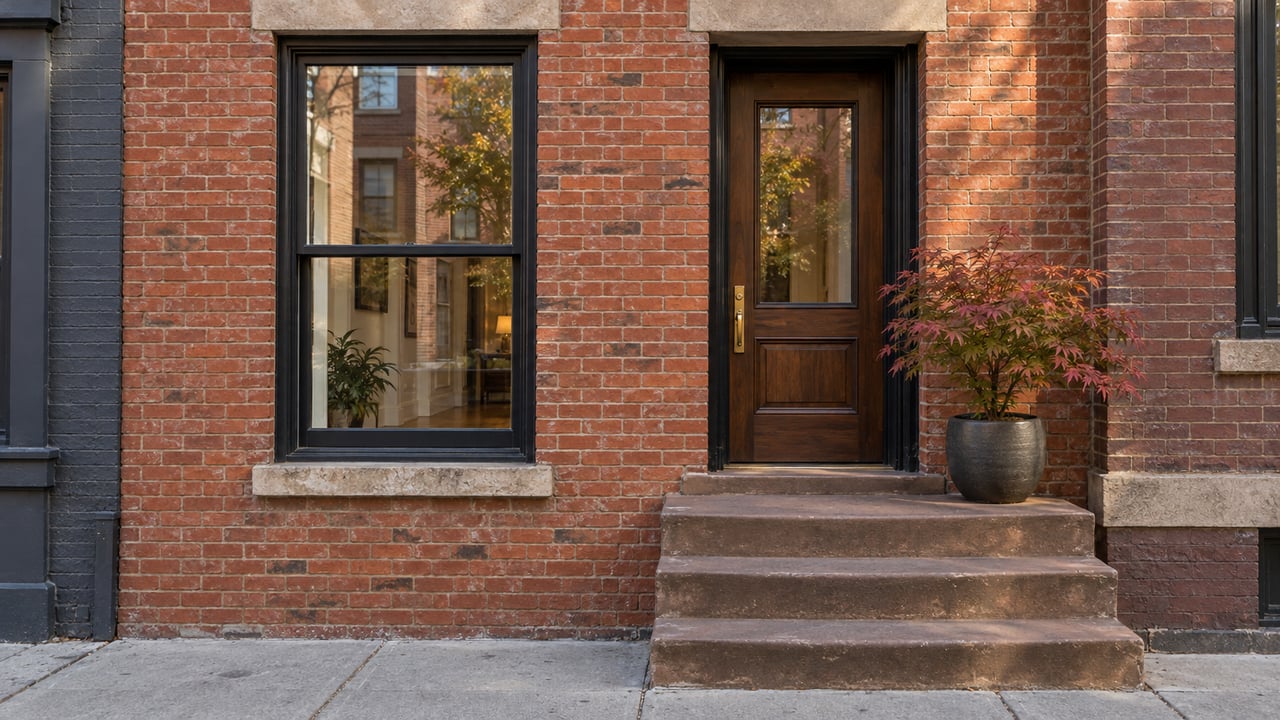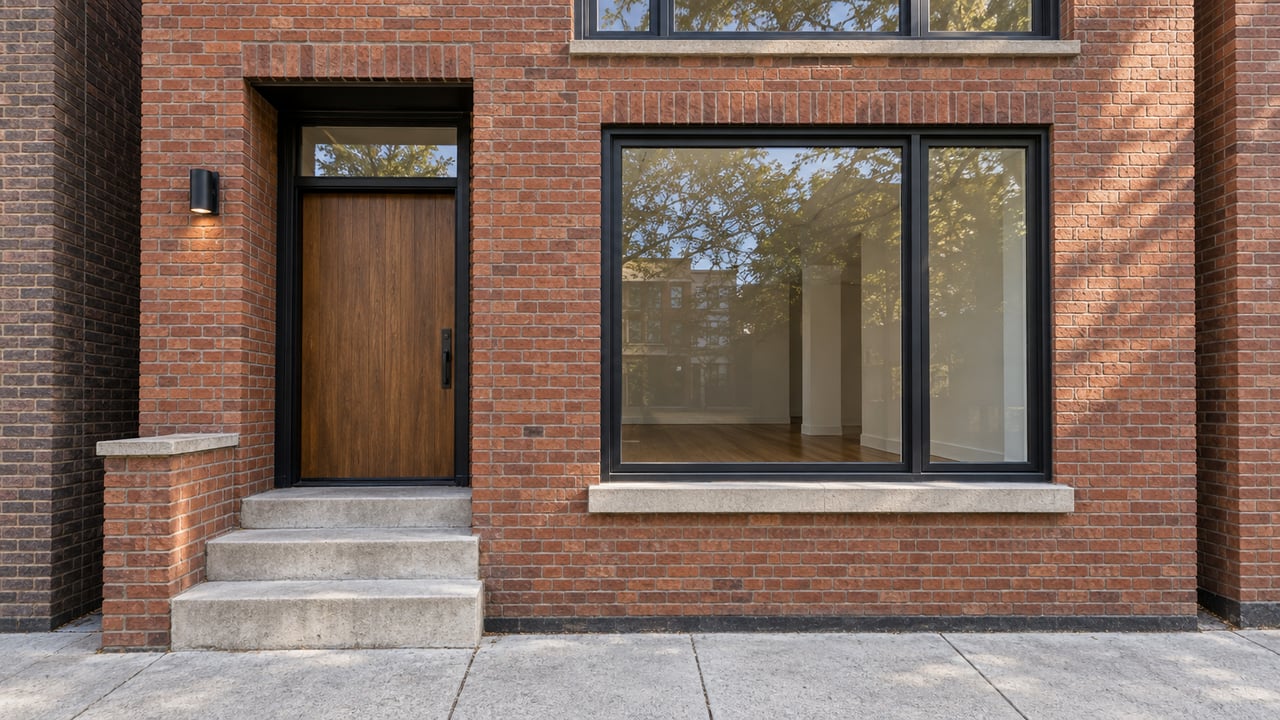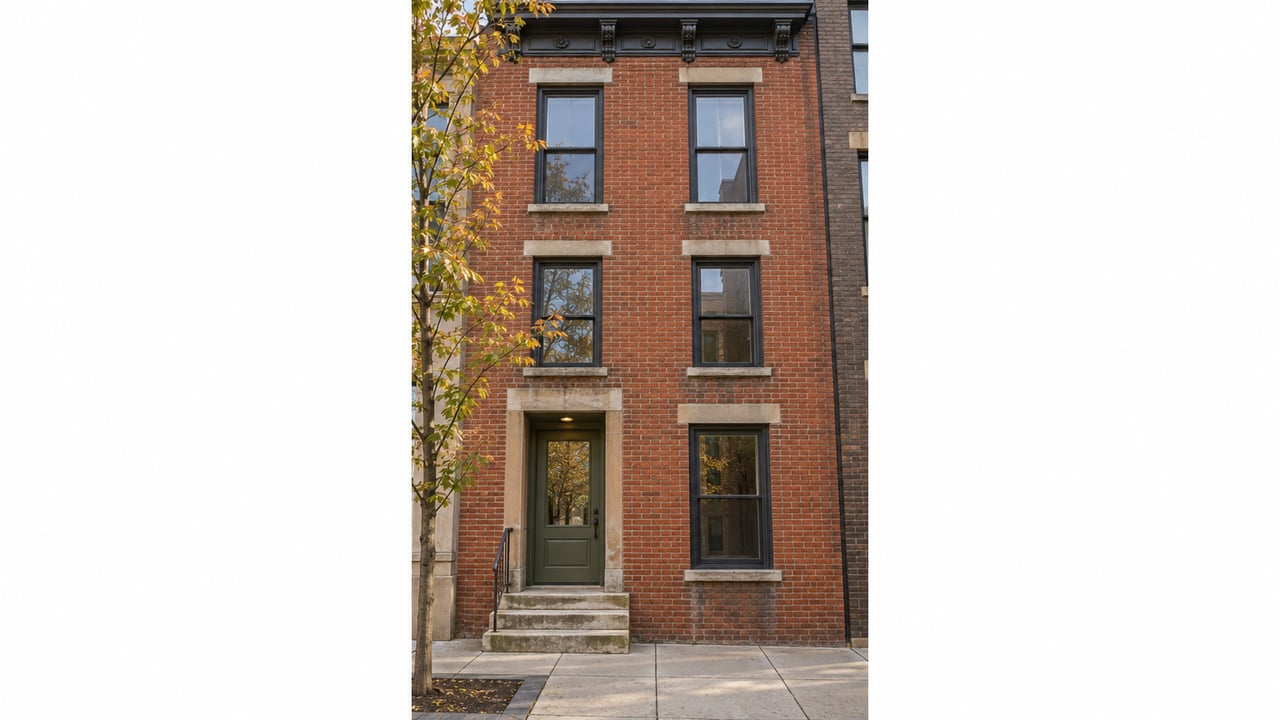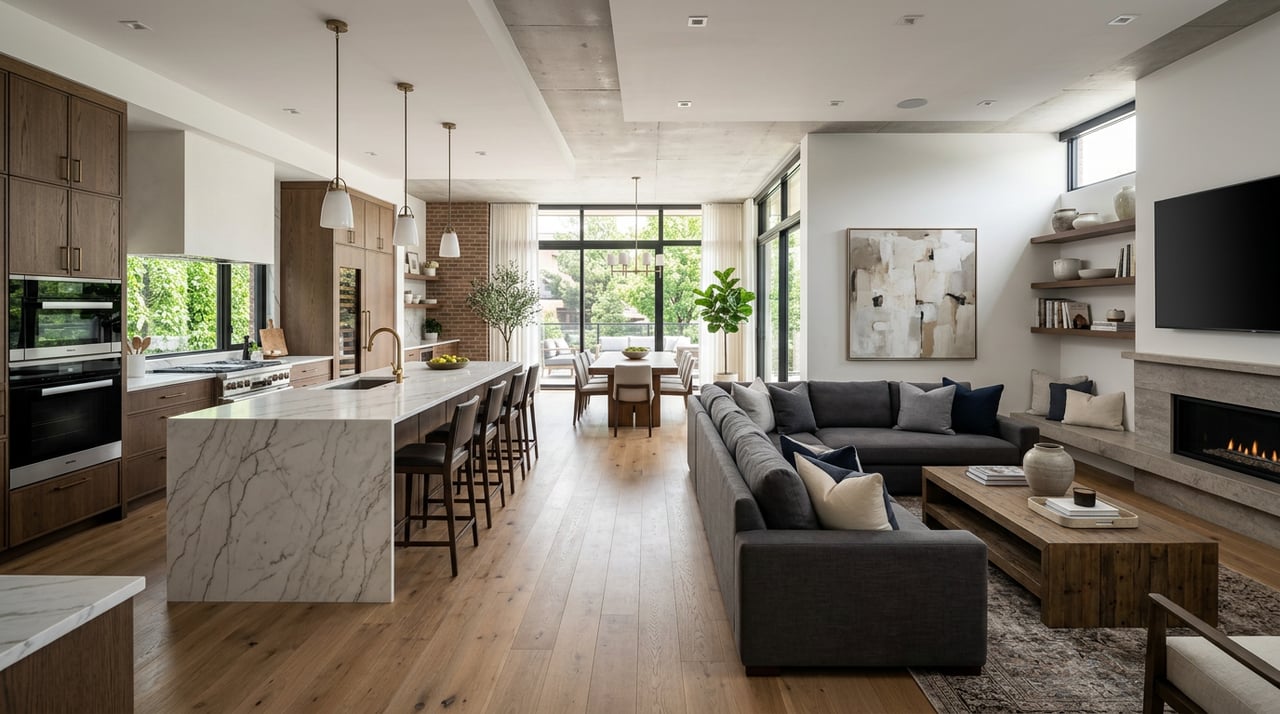
Two townhomes sit six blocks apart. One is a 2026 new build on North Capitol Street in Fairmount, listed at just over $500,000. The other is a rehabbed rowhome on Parrish Street in Francisville, also listed in the low $500s. On the portals, they look like substitutes. In year three of ownership, they are not.
The median tells you Francisville is the cheaper of the two neighborhoods. It is, on paper. What the median cannot show you is the shape of the tax bill you will actually pay after the closing dust settles, and that shape is what separates a good Francisville purchase from a merely acceptable one.
This post is for buyers who have already looked at both neighborhoods on a portal, seen the price gap, and want to understand what that gap is really measuring.
What the Francisville median is measuring, and what it isn't
Recent neighborhood data pegs the average Francisville sale price at $415,000, down roughly 5% year over year, with homes going pending in about 66 days and a competitiveness score that lands well below the citywide temperature. That reads as softness. Across the full Philadelphia market, the picture is different: the median sale price over the three months ending May 2026 was $290,000, up 3.5% year over year, and metro-level data from the same month put the broader Philadelphia median at $405,000 with inventory up 11.6% from a year earlier.
Francisville is doing something specific inside that broader market. It is absorbing a lot of new construction at price points well above the neighborhood's rehab and rowhome comps. New-build inventory in the neighborhood carries a median list around $515,000, which is why the neighborhood "average" and the price of the home you are actually touring can be so far apart. You are not looking at one market. You are looking at two stacked on top of each other: an older rowhome and duplex market in the $300s and $400s, and a new-construction townhome market starting in the low $500s and pushing higher as you drift east toward Ridge Avenue and south toward Fairmount proper.
Why so much of Francisville is brand new
Ridge Avenue is one of the oldest roads in the city, dating to William Penn's settlers, and Francisville has spent the last fifteen years filling in the vacant lots that opened up when industry left in the twentieth century. A recent long-form treatment of the neighborhood's evolution described the transformation as the latest chapter in a 300-year cycle of reinvention, with new housing developments, rising values, and Center City proximity making the area a focal point for redevelopment.
You can see the result on any walk east on Girard or south on Ridge. The Divine Lorraine has been operating as apartments for years. The MET Philadelphia is drawing crowds a few blocks north. In between, developers have been assembling parcels and putting up townhomes on former vacant lots, most of them marketed with a familiar headline feature: a 10-year tax abatement.
That abatement is the mechanism that makes Francisville's new-construction pricing pencil out for a buyer at $500,000-plus in a neighborhood whose broader median sits below $420,000. It is also the mechanism most likely to surprise you in year three.
The abatement math nobody puts on the listing sheet
Under Philadelphia's residential tax abatement, a buyer of new construction pays taxes only on the land value, not on the improvement, for ten years. The program has existed in some form since 2000. What changed is the shape of the benefit.
For any abatement application filed on or after January 1, 2022, the exemption starts at 100% in year one and steps down 10% each year until it hits zero in year eleven. The full holiday is gone. The current city millage is 1.3998%, split between the city and the school district, and a citywide reassessment took effect January 1, 2025. Homes carrying an active abatement are not eligible for the Homestead Exemption, which otherwise knocks $100,000 off the assessed value and saves most owners about $1,399 a year.
Here is what that phase-out looks like on a Francisville new-build with a land value assessed at $75,000 and an improvement value assessed at $425,000, holding the millage and assessment steady for illustration:
| Year | Exempt share of improvement | Taxable improvement value | Approx. annual property tax |
|---|---|---|---|
| 1 | 100% | $0 | ~$1,050 |
| 3 | 80% | $85,000 | ~$2,240 |
| 5 | 60% | $170,000 | ~$3,430 |
| 7 | 40% | $255,000 | ~$4,620 |
| 10 | 10% | $382,500 | ~$6,405 |
| 11 | 0% | $425,000 | ~$7,000 |
The Office of Property Assessment can also change the underlying land or improvement values during that window, and the city or school district can change the millage, so the real numbers will move. Your tax bill is not frozen just because you have an abatement.
Two consequences follow. First, the monthly carrying cost quoted at closing on a new-construction Francisville home is the lowest monthly cost you will ever pay on it, not an average. Second, the resale you make in year six or seven will be priced by a buyer who is doing this same math in reverse, and who is comparing your remaining abatement years against a rehabbed rowhome next door that already carries a stabilized bill and qualifies for the Homestead Exemption.
The rehab across the street is not the same trade
Consider the Parrish Street duplex we opened with. It is a rehabbed multi-family with modern kitchens and in-unit laundry, listed within walking distance of the Divine Lorraine and The MET. As an owner-occupant of one unit, a buyer would pay tax on the full assessed value from day one, but would also be immediately eligible to file for the Homestead Exemption and lower the assessed value by $100,000.
On a $500,000 assessed rehab, the effective annual tax after the exemption sits around $5,600. On the new-construction townhome next door in year one of a post-2022 abatement, the same buyer pays closer to $1,050. That gap looks like a clear win for the new build. In year five, using the illustration above, the new-construction bill is roughly $3,430 and the rehab bill is still roughly $5,600. By year eight or nine, the gap has closed to the low hundreds, and the rehab has been eight years into a stable, predictable tax line while the new build has been climbing every January.
Neither is the "right" answer. They are different products priced against different tax curves. What matters is that a buyer running a 30-year budget on the new build using the year-one tax number is understating true carrying cost by a meaningful margin. A buyer running the same budget on the rehab and treating it as "more expensive to hold" is missing that the rehab's number is the number.
What to ask before you sign in Francisville
If you are seriously looking at a new-construction Francisville townhome, a few specific questions will save you a real amount of money and confusion.
- Confirm with the seller when the abatement application was filed with the Office of Property Assessment, not just when the certificate of occupancy issued. Post-2022 applications follow the phase-out schedule. A small number of homes on the market still carry pre-2022 abatements with the older 100% for ten years structure, and those are worth more.
- Ask for the current assessed land value and the current assessed improvement value separately. The tax you pay during the abatement is a function of the land number, and that number can be re-set by the Office of Property Assessment.
- If the home is a rehab, confirm whether a partial abatement was filed on the improvements. Rehab abatements exist and are commonly missed.
- If you plan to occupy the home, calendar the Homestead Exemption application for the first January after the abatement expires. It cannot run concurrently.
- On any home, ask the seller's agent for the actual last four quarters of tax bills, not the OPA estimate. The two often disagree in Francisville because reassessments landed here harder than in some older neighborhoods.
FAQ
Is Francisville still a "seller's market" the way Fairmount is? Neighborhood-level metrics show Francisville running softer than the citywide average, with an average sale price down about 5% year over year and pending timelines around 66 days as of mid-2026. Adjacent Fairmount blocks, and Francisville's own new-construction pockets, are pricing more firmly. Treat Francisville as a two-track market rather than a single one.
Does a longer remaining abatement really change resale value? Yes, in a measurable way. Buyers price homes with abatement years left against homes without them, because those remaining years translate directly into lower monthly carrying cost. Homes with three or four abatement years left tend to trade closer to fully taxed comps. Homes with eight or nine years left often trade at a premium.
What about the mayor's proposal to bring back a 100% abatement in some parts of the city? The Parker administration floated exploring a return to a full 100% abatement in specific underinvested parts of Philadelphia during 2025 budget hearings, but any change would need to clear the Law Department and City Council. As of this summer, the post-2022 phase-out schedule is what applies to Francisville new construction, and that is what you should underwrite to.
If you are weighing a Francisville new build against a Fairmount rehab, or trying to figure out which side of Ridge Avenue your budget actually fits, Conchetta Park will walk the block with you, pull the real tax history, and price the trade honestly before you write an offer. Let's Connect.